
How to reclaim your inner authority in a world full of experts

A client once told me about a conversation she had with a fellow organ transplant patient in her specialist’s waiting room. She was informing him of all the lifestyle changes she was making to improve her own chances of survival and success. Expecting her insights to be met with curiosity, interest, and perhaps even enthusiasm, she was surprised when he seemed distrustful and sceptical. ‘Who told you to do that?’ was his pointed question to her.
No one ever sat us down and explicitly taught us to disown responsibility for our health or bodies. No one openly discouraged us from trusting ourselves.
But here we are.
Waiting to be told what to do. Distrustful of ourselves and doubtful of our capacity to influence our own body’s state of health and vitality.
It happened by stealth. Through subtle messaging:
Trust the expert. Trust the authority. Trust the system. Trust the science. Trust the data.
While the experience and expertise of the authorities is indeed useful, valuable, or even lifesaving, the downside is that unconsciously you’ve learned something else alongside it:
Don't trust yourself too much. Don't trust your feelings. Don't trust your instincts. Don't trust what you know. Don’t trust your body.
I’ve observed this time and time again in myself and clients. Information-addiction. When life feels uncertain or confusing, your first instinct is often to seek information. To look outside yourself for answers. You seek another opinion. Another book. Another practitioner. Another framework. Another course. Another expert to tell you what you should do.
But I feel like it’s got to saturation point and the game is up.
Despite having access to more information than ever before, despite drowning in data, despite SO MANY accessible solutions, I am still seeing clients that feel stuck. That feel confused and uncertain. Why?
Because clarity doesn't come from information.
It comes from connection.
Information can be incredibly helpful. It can expand your perspective, teach new skills and offer valuable guidance. But information alone does not replace a relationship with yourself.
When you’re knee-deep in data, overwhelmed and confused, eventually the question must stop being "What does everyone else think?" and become "What do I know to be true for me?"
That can be an uncomfortable question to ask. Especially if you've spent years outsourcing your decisions, doubting your instincts or looking to others for validation.
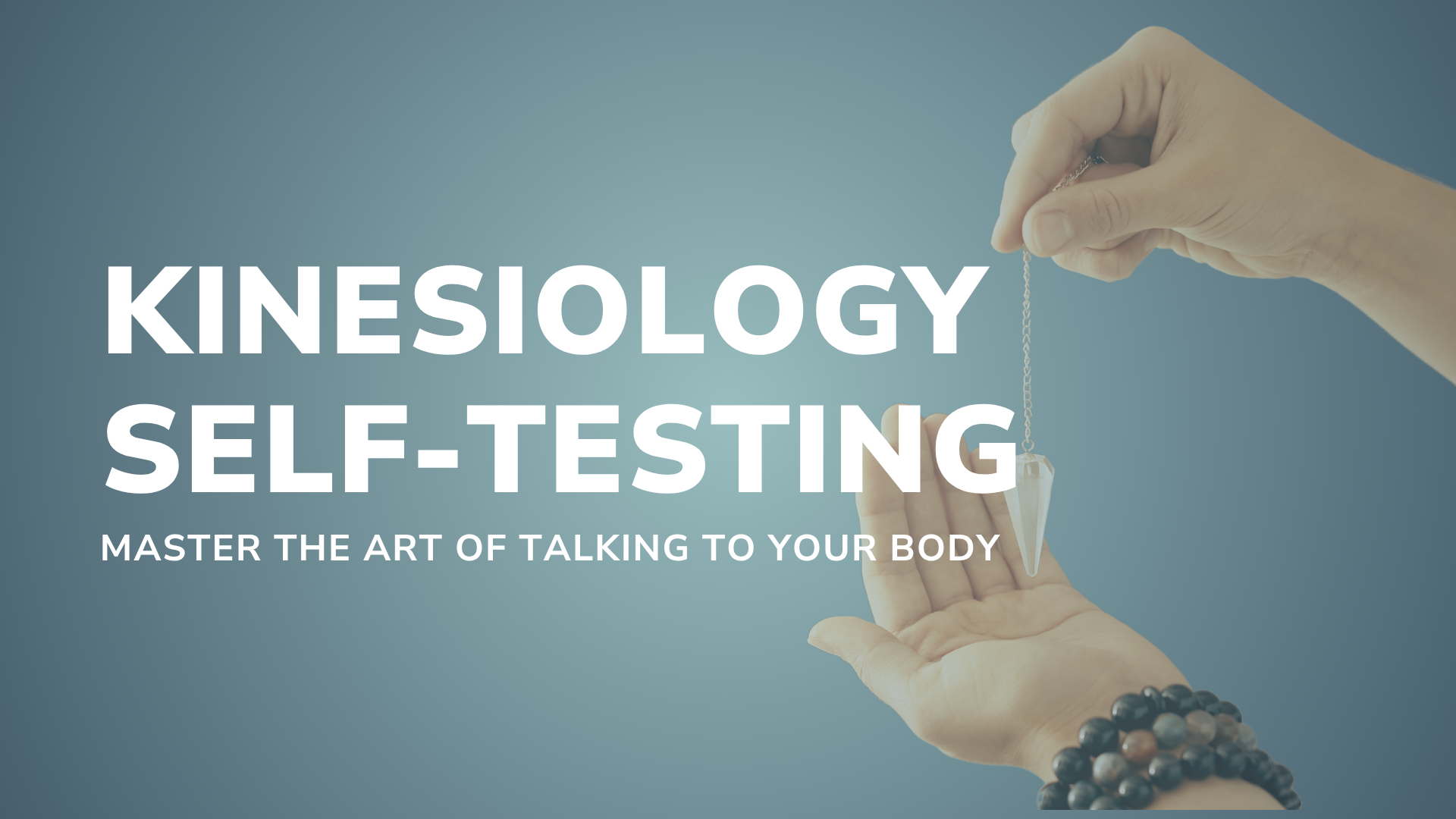
One of the key parts of working as a Kinesiologist is re-educating a client who falsely assumes ‘I don’t know the answer to my problems’. You do know. Always. You’ve simply lost access to your own knowing.
Kinesiology isn't amazing simply because it gives you access to your answers, it’s true magic lies in creating the right conditions for you to be able to hear yourself again. To notice what you’re feeling. To become aware of what's happening in your body. To recognise patterns you might have overlooked. To access insights that are already there, underneath all the noise.
Rather than passively consuming information, it makes the body an essential part of the conversation. You place yourself in a world where your thoughts matter. Your experiences matter. Your emotions matter. Your body's responses matter.
To survive and thrive in an information-saturated world that trains us to rely on external authorities, I believe we must get better at connecting with ourselves and asking:
What feels true for me?
What am I noticing?
What do I already know?
When you listen more deeply to yourself, you often discover that the wisdom you've been searching for externally has been quietly waiting for your attention all along. You just needed to create the space for your own knowing to be accessed and heard.
Reclaiming your inner authority isn't about isn’t about ignoring expert opinion, rejecting guidance or being ‘anti’ anything. It’s also not about ‘going it alone’ or pretending that you never need support. The practitioners, experts, teachers, mentors and self-help books offer you much needed and valuable guidance. But they can't live inside your experience. They can't feel what you feel and they can't make every decision for you.
At some point, your inner voice of wisdom must become part of the conversation. While you’re listening to the experts you also need to be able to hear yourself. You don’t need to worry about having all the answers, you just need to develop enough trust in yourself so that you’re willing to listen when your inner voice speaks.