Why self-trust matters more than certainty
The problem isn't a lack of wisdom. It's a lack of trust in the wisdom you already have.
What if you're not ready?
What if you're not qualified enough?
What if someone asks a question you can't answer?
What if you've overestimated your abilities?
God forbid...
What if you actually are an imposter? 😱
The self-development industry seems quite obsessed with helping people overcome imposter syndrome.
You're encouraged to challenge your thoughts, gather evidence, build confidence, improve your mindset and eliminate self-doubt. The underlying assumption is that if you can just think differently, you'll finally stop feeling like a fraud.
The other day I was listening to a business podcast when the coach casually said:
"If you're experiencing imposter syndrome, it's probably because you are an imposter."
Whaaaaaaaaaaaaattttt? 🫳🏻🎤
No reassurance.
No encouragement.
No comforting explanation.
Just a blunt statement.
It took me a while to digest it.
But as I sat with it, I realised he was right. If you don't feel confident sharing what you know, perhaps there is genuinely more to learn. Perhaps you're still developing mastery. Perhaps your knowledge isn't fully embodied yet. Because when you know something deep down in your bones, it's very difficult to feel like an imposter about it. You can't fake embodied wisdom. You either have the lived experience, or you don't.
And let's be honest—actual imposters do exist. A quick doomscroll through social media will usually provide plenty of examples.
But I don't think that's why most people experience imposter syndrome.
The people I see struggling with it are often thoughtful, capable and highly self-aware. They're experienced practitioners. Skilled professionals. People who have spent years learning, refining and developing their craft.
And yet they still doubt themselves.
What happens when you do have the wisdom and knowledge? What happens when you do have the qualifications? When you’ve done the work? When you have genuine wisdom born from experience?
Why do you still feel like an imposter then?
Stop aiming for certainty and start cultivating trust
If you know something in your bones and still feel like an imposter, perhaps the problem isn't a lack of wisdom.
Perhaps it's a lack of trust in the wisdom you already have.
I think many people get stuck trying to "fix" imposter syndrome because they're trying so hard to eliminate doubt.
They want confidence, certainty and self-assurance - but they want it without ever having to experience fear, uncertainty or self-doubt again. They're trying to arrive at some magical destination where they finally feel qualified enough, experienced enough, healed enough or confident enough.
But there is no way to remove uncertainty from life.
There isn't a point where doubt disappears forever. There is no certification that proves you always know what you're doing. There is no level of personal development that makes you immune to questioning yourself.
The opposite of imposter syndrome isn't certainty.
It's self-trust.
People with genuine confidence aren't necessarily the most certain or informed. They're simply willing to move forward without having all the answers.
In fact, the need for certainty often appears when trust is absent.
Think about it.
When you're deeply connected to yourself, you don't need guarantees. You don't need to know exactly how everything will unfold. You don't need everyone else's approval. You don't need to eliminate every possible risk. You simply need enough trust in yourself to meet whatever happens next.
If you truly want to stop feeling like a fraud, you need to build a relationship with yourself that is strong enough to hold uncertainty.
A relationship built on trust, compassion and honesty. A relationship that can tolerate fear and doubt. A relationship that allows you to make mistakes, recover from imperfect decisions and admit when you don't know enough.
Within that kind of relationship, the fear of being ‘found out’ begins to soften.
Not because you've figured everything out, but because you've developed confidence in your ability to respond to whatever life presents.
If you've been trying to get rid of imposter syndrome, perhaps it's time to focus on cultivating self-trust instead. To invest in a stronger relationship with yourself.
Because when that relationship deepens, something shifts. You stop expecting yourself to know everything. You stop demanding certainty before taking action. You stop treating doubt as evidence that something is wrong.
Instead, you learn to trust what you do know, accept what you don't, and move forward anyway.
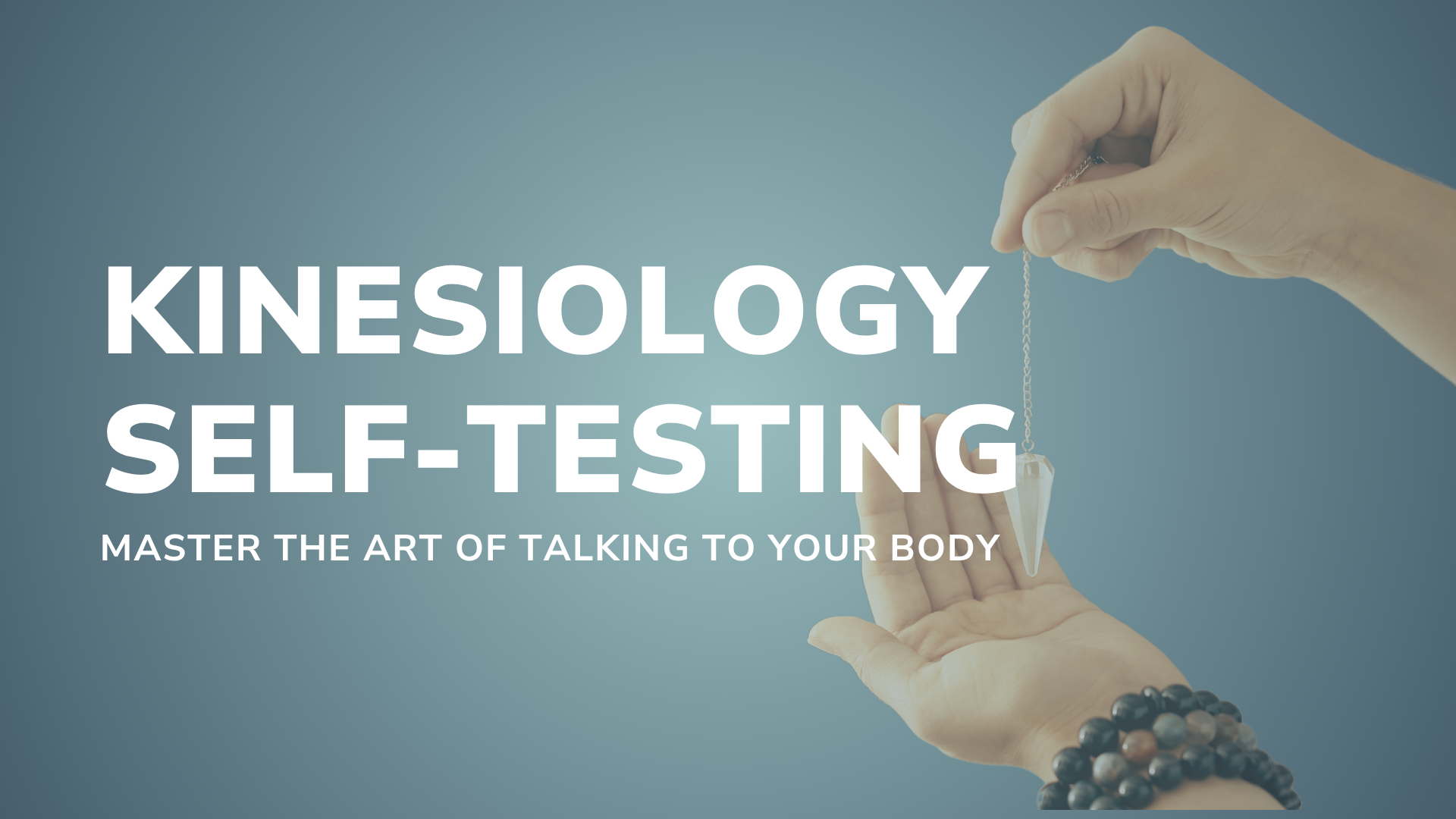
One of the reasons I love kinesiology self-testing is that it helps transform self-trust from an abstract concept into a practical skill.
Rather than endlessly seeking reassurance outside yourself, you learn how to develop an ongoing conversation with your body, strengthen your inner authority and build confidence in your own knowing.
My 6-week online Kinesiology Self-Testing course, Master the Art of Talking to Your Body, is designed to help you cultivate the relationship that self-trust depends upon—one question, one conversation and one moment of listening at a time.
Because the goal isn't to become certain about everything.
It's to trust yourself enough to navigate uncertainty with greater clarity, confidence and ease.