
The difference between collecting data and cultivating self-trust
We are living in an age of unprecedented self-surveillance. Our watches track our steps. Our rings track our sleep. Our apps track our mood, habits, calories, hydration, heart rate variability and stress levels.
We've never had more information about ourselves. And yet, I’m still seeing clients who feel disconnected from their bodies.
Is access to all this rich data and its bio-hacking opportunities bringing your mind and body closer together?
I’m not sure 🤔
Tracking data is not the same as listening to your body.
Tracking is an act of the analytical mind. It’s about observing, measuring, categorising and evaluating. It asks: How many hours did I sleep? How many steps did I take? What was my resting heart rate? Did my stress score improve?
Listening to the body, however, is an act of the Heart and Mind. It’s about the compassionate witnessing that occurs in a relationship. It asks: How am I actually feeling? What is my body trying to tell me? What do I need right now? What feels true for me?
In a nutshell, tracking is gathering statistics and evaluating performance. Listening is cultivating understanding and developing relationship.
Imagine Being Treated Like Your Fitness Tracker Treats You
If there’s one thing I’ve learned as a therapist, it’s that all humans want is to be heard and understood.
Imagine if every conversation with a loved one was reduced to data points.
You tell them you're exhausted. They respond: "Interesting. Your sleep score was 83."
You tell them you're unhappy. They reply: "Your heart rate variability is within normal range."
You tell them you're questioning your career. They answer: "Your recovery metrics look excellent."
Technically, none of these responses are wrong. But none of them make you feel heard. Observation and measurement do not make you feel understood. Feeling understood requires connection. It calls for presence, curiosity and validation.
This is the difference between tracking and listening.
One cares about the stats.
The other cares about your state.
The Problem with Outsourcing Authority
The problem isn’t the technology. Data is extremely useful. Devices provide a great incentive for self-care, assisting you to pay more attention to your body and its needs and make more informed and healthier choices.
The problem begins when you become enslaved to the data. Addicted to progress. Obsessed with results. And trusting the data more than your own experience.
When you wake up feeling energised but check your device and discover your sleep score wasn't good enough. Suddenly you're tired.
When you feel inspired and excited, but your readiness score suggests you should rest. Suddenly you doubt yourself.
In the process of developing a sophisticated relationship with your device, you might be losing touch with your own internal guidance system.
Reaching for your device and asking: “What does my data say?” instead of tuning into your body and asking, “What is my body trying to tell me?”
Subtly, your authority is shifting from within to without. This is a problem because your body was designed to be your primary source of feedback. Not your Fitbit. Not your smartwatch. Not your ring.
What Your Devices Can't Tell You
Your wearable can tell you how many hours you slept. It can’t tell you whether you're living a life that nourishes your soul.
It can tell you your stress levels. It can’t tell you why your spirit feels trapped.
It can tell you your heart rate. It can’t tell you whether the relationship you're in is draining your life force.
It can tell you how your nervous system is functioning. It can’t tell you whether the career decision you're considering is aligned with your highest good.
It can’t tell you where old emotional wounds are shaping your choices. Where inherited patterns are influencing your behaviour. Where unresolved experiences are lodged within your energy system.
And it definitely can’t tell you, in the voice of your Inner Child, whether you're truly happy.
The Body Speaks a Different Language
One of the reasons you might struggle to listen to your body is because you're expecting the body to communicate like the mind.
The mind uses words. The body uses sensations.
The mind argues. The body responds.
The mind explains. The body reveals.
Your body is constantly communicating through:
Tension
Relaxation
Expansion
Contraction
Energy
Fatigue
Attraction
Resistance
Symptoms
Intuition
Your body is ALWAYS speaking. The question is whether you know how to listen.
If you’re stuck on the treadmill of collecting more information - more data, metrics, insights and analysis, you’re doing so at the expense of directly engaging with your body. Learning its language. Listening to it. Responding to it and respecting its feedback. Building a relationship that promotes resilience, courage and confidence in your own intuitive nudges. The cultivation of your inner authority.
And this is something no wearable device can ever give you.
You don’t need to throw your tracker in the bin; just don't let it replace the loving conversation your body wants to have with you. Because the most important relationship in your life is not the one with your device. It's the one with your body.
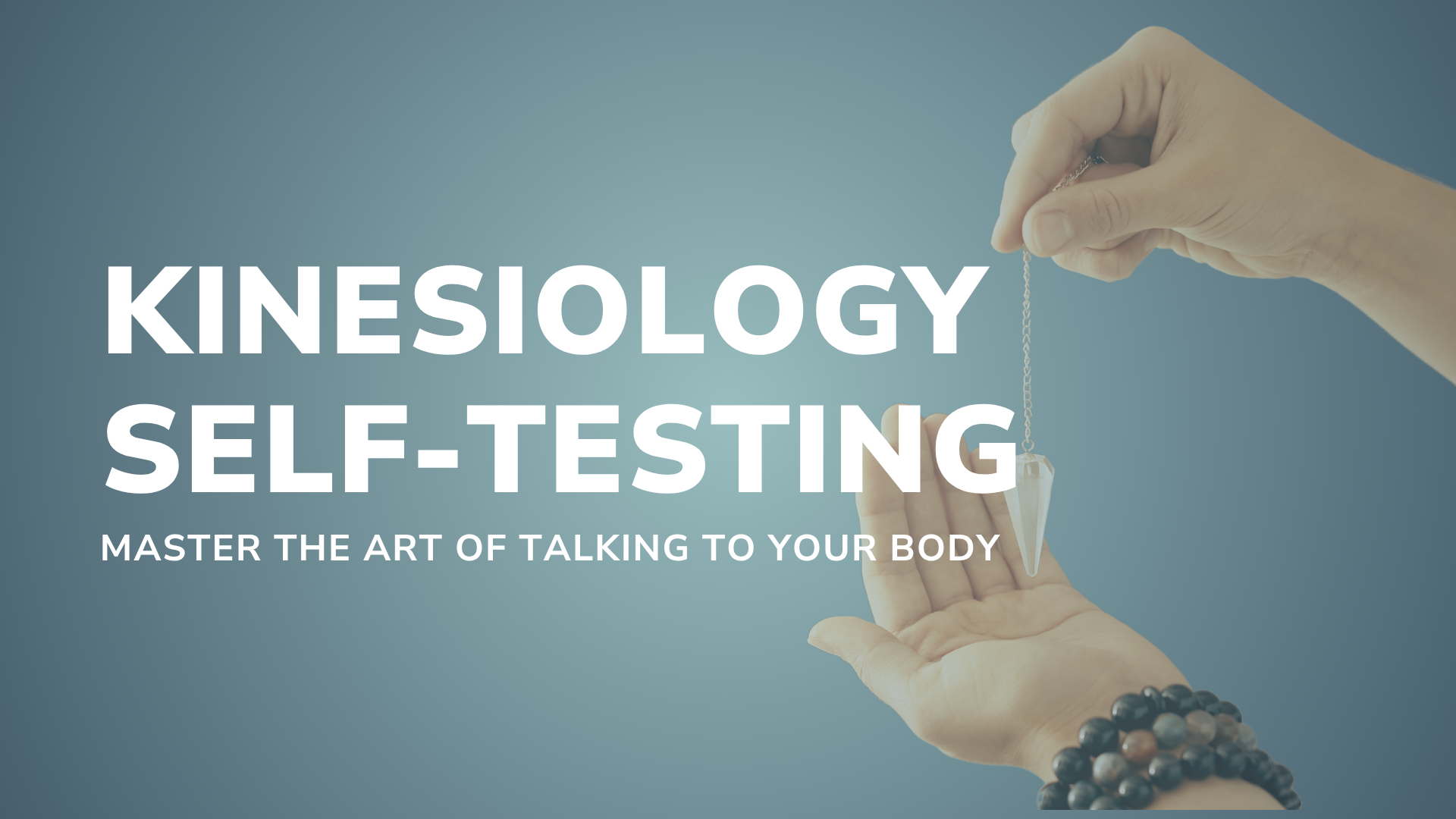
Everybody tells you to listen to your body. Very few people teach you how.
If you've ever wished you could access clearer guidance, make decisions with greater confidence, or develop deeper trust in yourself, my Kinesiology Self-Testing course will show you how.
You'll learn a practical, repeatable system for communicating with your body so that you're no longer relying solely on external opinions, endless research, or guesswork.